


Low-Energy Vacuum Emulsifier: Does It Reduce Air Bubbles?


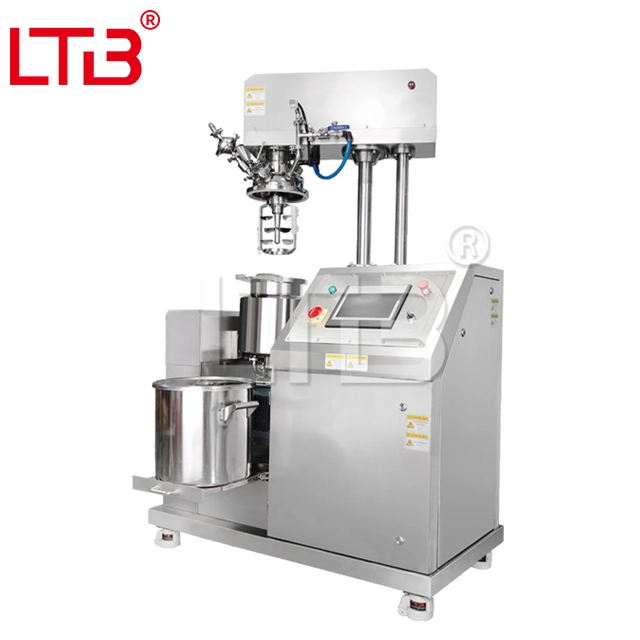
Many manufacturers assume that reducing energy input during mixing automatically leads to fewer air bubbles in cosmetic creams and lotions. This idea sounds logical, yet the real situation in production is more complex. Bubble formation depends on several interacting variables including shear intensity, viscosity, mixing sequence, temperature, and vacuum stability. That is why a Vacuum Emulsifying Mixer has become a key piece of equipment in cosmetic manufacturing. Instead of relying solely on lower energy consumption, this system integrates controlled homogenization and vacuum deaeration to manage air entrainment during the emulsification process. Understanding how these factors work together is essential for anyone seeking smoother creams, consistent density, and visually appealing finished products.
Why Air Bubbles Are a Bigger Problem Than They Look
Bubbles can affect appearance and perceived quality
Air bubbles are often underestimated during the early stages of formulation development. At first glance they may appear harmless, especially when the product is still in the mixing vessel. However, once the cream is packaged into jars or tubes, bubbles become much more noticeable. Small pockets of trapped air may create uneven surfaces or tiny voids that affect how consumers perceive the product’s quality.
For premium skincare products, visual appearance matters significantly. A smooth, uniform cream surface signals professionalism and careful production control. When bubbles appear, the product may look unstable or poorly manufactured even if the formula itself is correct.
Trapped air can influence filling accuracy and density
Beyond appearance, air bubbles can also interfere with filling operations. Automated filling equipment measures volume based on liquid flow and density. If air is trapped in the cream, the apparent volume increases even though the actual product mass remains lower.
This discrepancy can create inconsistent package weights and increase material loss. Manufacturers may end up using more product than expected just to maintain correct fill levels.
Bubble reduction can help improve texture consistency
Air bubbles can also influence how a cream feels during application. When the product contains excessive air, the texture may feel foamy rather than rich and smooth. Consumers often associate dense, uniform creams with higher quality formulations.
Reducing trapped air during production helps maintain the intended texture and improves overall product consistency.
What Actually Causes Air Bubbles During Mixing
Surface entrainment during feeding and agitation
One of the most common sources of bubbles is surface entrainment. When liquid ingredients are poured into a mixing tank while agitation is already running, the moving liquid surface can pull air into the mixture.
If the mixing speed is high during the feeding stage, the problem becomes more severe. Air becomes incorporated into the batch before the emulsification process even begins.
High-speed mixing at the wrong stage
High shear mixing is essential for emulsification, but applying high speeds at the wrong stage can introduce air instead of removing it. When ingredients are not yet fully combined, rapid agitation may whip air into the mixture.
Proper process sequencing ensures that high-speed homogenization occurs only after the phases are correctly prepared.
Thick formulas that trap air more easily
High-viscosity formulations naturally trap air more easily than thin liquids. Ingredients such as waxes, polymers, and thickening agents increase the resistance to flow within the tank.
Once air becomes trapped in a dense mixture, it becomes much harder to remove unless a vacuum environment is used.
What the Vacuum Function Really Does
Vacuum helps remove entrained air from the batch
The vacuum system inside an emulsifying mixer plays a critical role in bubble control. By lowering the pressure inside the mixing vessel, trapped air expands and rises more easily to the surface where it can be removed.
This process significantly reduces the number of bubbles remaining in the final product.
Vacuum can reduce oxidation and improve finish
Another advantage of vacuum processing is the reduction of oxygen exposure. Oxygen can affect certain cosmetic ingredients and may contribute to color changes or reduced shelf stability.
A controlled vacuum environment helps protect sensitive ingredients while improving the smoothness of the finished cream.
Vacuum works best when process conditions are already well controlled
Although vacuum technology is powerful, it is not a standalone solution. Its effectiveness depends on how the overall process is managed. Factors such as mixing speed, feeding sequence, and temperature control must be optimized to achieve the best results.
A well-designed vacuum emulsifying system integrates these elements into a coordinated production process.
Does Lower Energy Input Help or Hurt Bubble Reduction
Lower energy may reduce unnecessary turbulence
Reducing mixing intensity can sometimes help limit turbulence at the liquid surface. When agitation is too aggressive, air can be drawn into the mixture more easily.
Lower energy input may therefore reduce the initial formation of bubbles during early mixing stages.
Too little shear may leave the emulsion under-processed
However, reducing energy too much can create new problems. Emulsification requires sufficient shear to break down oil droplets and distribute them evenly within the formulation.
If shear intensity is too low, the emulsion may remain unstable. This can lead to phase separation or uneven texture in the finished product.
The right answer depends on product structure, not power alone
Each cosmetic formulation behaves differently during processing. Some creams benefit from gentler mixing, while others require strong homogenization to achieve the desired structure.
The goal is not simply to reduce energy usage but to apply the correct level of energy at the appropriate stage of the process.
What Matters More Than “Low Energy” in Real Production
Feeding sequence and phase addition method
The order in which ingredients are added can significantly influence bubble formation. For example, adding oils slowly into a prepared water phase can reduce turbulence and improve emulsification efficiency.
Controlled ingredient feeding also helps maintain stable mixing conditions.
Homogenizer speed and mixing time
Homogenizer performance plays a central role in droplet size reduction. Properly adjusted speeds ensure that the emulsion forms quickly and evenly.
Balancing mixing time and shear intensity prevents unnecessary aeration.
Tank design, scraper action, and vacuum stability
Equipment design influences how materials move inside the vessel. Scraper blades that continuously sweep the tank wall improve circulation and prevent product buildup.
Stable vacuum systems ensure that air removal occurs consistently throughout the mixing process.
Formula viscosity and temperature window
Viscosity and temperature strongly affect air release. Heating phases to the correct temperature reduces viscosity temporarily, allowing bubbles to escape more easily before the product cools and thickens.
When a Low-Energy Approach Makes Sense
Sensitive creams that do not need aggressive processing
Certain cosmetic products contain delicate ingredients that may degrade under intense shear. In these cases, a lower energy mixing strategy can protect ingredient integrity.
Batches where heat buildup must be controlled
High-speed mixing generates heat through mechanical friction. For heat-sensitive formulations, lower mixing intensity helps maintain temperature stability.
Operations focused on energy cost and stable repeatability
Reducing unnecessary power consumption can improve production efficiency over long manufacturing cycles. Controlled energy usage also contributes to stable and repeatable processing conditions.
When Low Energy Is Not Enough
Dense emulsions that still require strong homogenization
Rich creams with high oil content often need strong shear forces to achieve stable emulsification. Lower mixing energy alone cannot create the necessary droplet size distribution.
Formulas with powders, waxes, or hard-to-disperse ingredients
Powders and waxy materials require intensive mixing to disperse completely. Without sufficient shear, these ingredients may form clumps or remain unevenly distributed.
Situations where equipment design matters more than motor size
Efficient mixing depends not only on motor power but also on the geometry of the homogenizer and the overall vessel design. Equipment engineered specifically for emulsification ensures more effective mixing with controlled energy input.
What Influences Air Bubble Reduction in a Vacuum Emulsifying Mixer
Factor | Helps Reduce Bubbles | Why | Operator Note |
Vacuum pressure | Yes | Expands and removes trapped air | Maintain stable vacuum level |
Mixing speed control | Yes | Prevents surface turbulence | Adjust speed during feeding |
Homogenizer design | Yes | Improves droplet dispersion | Ensure proper shear level |
Temperature control | Yes | Reduces viscosity temporarily | Heat phases before emulsifying |
Feeding method | Yes | Minimizes air entrainment | Add ingredients gradually |
Conclusion
Reducing air bubbles in cosmetic creams is not simply a matter of lowering energy consumption during mixing. Bubble control requires a coordinated process that includes proper ingredient feeding, controlled shear, stable vacuum conditions, and careful temperature management. When these factors are combined effectively, manufacturers can produce creams with smoother texture, better density, and improved visual quality. A well-designed cosmetic vacuum mixing system enables this balance by integrating homogenization and vacuum technology into a controlled production environment, supporting consistent and efficient cosmetic manufacturing.
Contact Us
If you are looking to improve cream texture, reduce trapped air, and achieve more stable emulsification during production, LTB Machinery Co., Ltd. provides advanced emulsifying equipment designed for cosmetics, pharmaceuticals, food, and personal care manufacturing. Our engineering team can help you configure the right system for your formulation and production capacity.
Contact us today to learn more about efficient vacuum emulsifying equipment and discover how it can support your manufacturing goals.
FAQ
1. Can a low-energy vacuum emulsifier completely eliminate air bubbles?
No. Lower energy mixing can reduce turbulence in some cases, but effective bubble removal depends mainly on vacuum performance and proper process control.
2. Why is vacuum mixing important for cosmetic creams?
Vacuum mixing removes trapped air during emulsification, helping produce smoother creams with more uniform density and improved visual quality.
3. Do thicker creams trap more air during production?
Yes. High-viscosity formulations often trap air more easily because the dense structure prevents bubbles from escaping naturally.
4. How can manufacturers reduce air bubbles during cream production?
Manufacturers should control mixing speed, ingredient feeding sequence, vacuum pressure, and temperature conditions to minimize air entrainment during emulsification.


