


Does Vacuum Emulsifying Mixer Work for High-Viscosity Products?


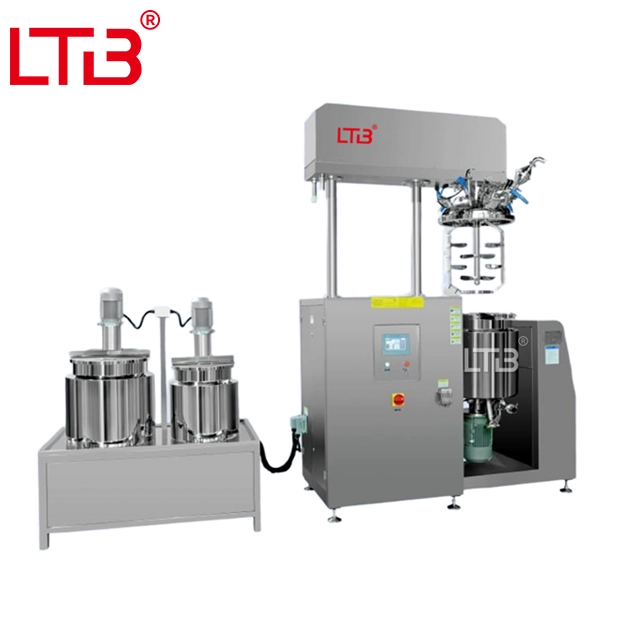
Thick creams, dense gels, and heavy ointments present unique challenges during manufacturing. Many producers worry that extremely viscous materials may not circulate properly inside the mixing vessel or that trapped air and uneven dispersion could reduce product quality. For this reason, a Vacuum Emulsifying Mixer has become a preferred processing solution for cosmetic, pharmaceutical, and personal care production lines. Unlike conventional mixing equipment, this type of system combines strong homogenization, controlled agitation, heating, and vacuum deaeration to process materials that would otherwise be difficult to handle. Understanding whether such equipment can truly manage high-viscosity products helps manufacturers determine the best production method for complex formulations.
What Counts as a High-Viscosity Product in Real Production
Rich cosmetic creams and body butters
High-viscosity products are those that resist flow and require significant mechanical force to move or mix. In cosmetic manufacturing, many skincare formulations fall into this category. Rich moisturizing creams, night creams, and body butters contain substantial oil phases, waxes, and thickening agents that produce a dense texture.
These formulations are intentionally designed to feel luxurious and nourishing on the skin. However, their thickness makes them more challenging to process during manufacturing.
Ointments, gels, and dense personal care products
Pharmaceutical ointments and therapeutic creams are often even thicker than cosmetic creams. They may contain medicinal ingredients suspended within a semi-solid base. These materials require careful mixing to ensure the active compounds are evenly distributed throughout the product.
Similarly, dense gels used in personal care products may contain polymers or stabilizers that significantly increase viscosity.
Food or pharmaceutical products with similar thick consistency
High-viscosity processing is not limited to cosmetics. Food products such as sauces, spreads, and specialty pastes can have comparable rheological properties. Pharmaceutical preparations also frequently involve thick emulsions or semi-solid materials.
Because these products share similar processing characteristics, they often require comparable mixing technologies.
Why Thick Products Are Harder to Process
They resist flow and circulation inside the tank
Thin liquids circulate easily during mixing. However, thick formulations resist movement, which makes it harder for ingredients to distribute evenly. In a standard mixing tank, some areas may experience strong agitation while other zones remain relatively stagnant.
This uneven circulation can result in incomplete blending.
Powders and actives are harder to disperse evenly
Many high-viscosity formulations include powdered ingredients or active compounds that must be evenly dispersed throughout the mixture. Without sufficient mixing power, these materials may clump together or remain unevenly distributed.
Achieving uniform dispersion requires strong mechanical forces that break apart aggregates and incorporate them into the base formulation.
Air can stay trapped more easily in dense material
Air bubbles tend to escape quickly from low-viscosity liquids, but thick products behave differently. Dense formulations can trap air pockets within the mixture, preventing them from rising to the surface.
If these bubbles remain in the final product, they may affect texture, stability, and appearance.
How a Vacuum Emulsifying Mixer Handles High Viscosity
High-shear homogenization breaks down droplets and particles
The homogenizer inside the mixing system generates intense shear forces that break down droplets and particles into extremely small sizes. This process creates stable emulsions and ensures that ingredients are evenly distributed.
For high-viscosity products, homogenization helps overcome resistance to mixing by applying concentrated mechanical energy directly to the material.
Scraper mixing helps move product off the wall
When processing thick formulations, product tends to adhere to the tank walls. Scraper mixing systems continuously sweep these surfaces and push the material back into the main mixing zone.
This movement improves circulation and prevents localized buildup that could interfere with the mixing process.
Vacuum supports smoother, less aerated texture
Vacuum conditions inside the tank reduce internal pressure and encourage trapped air bubbles to escape from the mixture. Removing air improves the final product appearance and ensures consistent density.
For dense creams and ointments, vacuum processing is especially beneficial because these materials naturally trap air during mixing.
Heating can improve flow during critical stages
Many high-viscosity formulations contain waxes or fats that melt when heated. Controlled heating temporarily reduces viscosity, allowing the ingredients to blend more easily.
Once the mixture is properly emulsified, cooling stabilizes the final structure.
Which Machine Features Matter Most for Thick Formulas
Homogenizer power and speed range
Processing dense formulations requires a homogenizer capable of delivering sufficient shear energy. Adjustable speed control allows operators to optimize mixing intensity based on the specific formulation.
A wide speed range provides flexibility for handling both moderate and extremely thick materials.
Strong wall scraping and anchor mixing design
Anchor agitators combined with scraper blades help move material throughout the vessel. This configuration ensures that thick products circulate properly and prevents stagnant areas inside the tank.
Efficient circulation improves mixing uniformity.
Reliable vacuum level under heavy load
Maintaining stable vacuum conditions is essential when processing high-viscosity products. A well-designed vacuum system must operate effectively even when the tank contains dense materials.
Consistent vacuum pressure helps remove trapped air during the mixing process.
Jacket heating and process control
Integrated heating jackets allow operators to control temperature precisely. For viscous formulations containing waxes or oils, heating reduces resistance to flow and supports more effective mixing.
Accurate temperature control also protects heat-sensitive ingredients.
When High-Viscosity Products Still Cause Problems
Overloading the tank reduces mixing efficiency
Filling the tank beyond its recommended capacity can reduce circulation efficiency. Thick products require sufficient space to move and mix properly.
Operating within the correct batch size range ensures that the equipment performs at its best.
Wrong ingredient order can create lumps or dead zones
Ingredient addition sequence plays an important role in emulsification. Adding powders or thickening agents too quickly can create lumps that are difficult to disperse.
Careful feeding methods help maintain a smooth mixing process.
Inadequate heating or poor pre-mixing slows the process
If waxes or oils are not melted properly before emulsification begins, the mixture may become difficult to process. Proper preparation of the oil and water phases ensures efficient emulsification.
How to Tell Whether Your Product Is a Good Fit
Look at viscosity range and batch size together
Manufacturers should evaluate both the viscosity of the formulation and the intended batch volume. Equipment that performs well with small batches may behave differently with larger volumes.
Matching machine capacity to product viscosity helps maintain consistent processing performance.
Consider whether the product contains waxes, powders, or actives
Certain ingredients require stronger mixing action to disperse properly. Products with waxes, powders, or suspended actives typically benefit from high-shear emulsification.
Understanding the ingredient composition helps determine the best processing approach.
Check whether you need fine texture or simply bulk blending
Some products require extremely smooth textures with very small particle sizes, while others only require basic blending. Identifying the desired product characteristics helps determine the necessary mixing technology.
Best Use Cases for High-Viscosity Processing
Face creams and night creams
Many skincare products rely on dense emulsions that provide long-lasting hydration and rich texture. These formulations benefit from controlled emulsification and vacuum processing.
Ointments and medicated creams
Pharmaceutical ointments require precise dispersion of active ingredients to ensure consistent dosage. High-shear emulsification ensures uniform distribution.
Thick gels and specialty personal care formulations
Hair styling gels, cosmetic masks, and specialty personal care products often contain polymers that increase viscosity. Proper mixing technology ensures these materials remain smooth and stable.
High-Viscosity Product Challenges and the Machine Features That Solve Them
Processing Challenge | Why It Happens | Helpful Machine Feature | Expected Benefit |
Poor circulation | Dense material resists movement | Anchor mixing with scraper blades | Improved mixing uniformity |
Uneven dispersion | Powders and actives clump together | High-shear homogenizer | Better ingredient distribution |
Trapped air | Thick material holds bubbles | Vacuum deaeration system | Smoother texture |
High resistance to mixing | Oils and waxes increase viscosity | Jacket heating system | Easier emulsification |
Product buildup on walls | Sticky formulations adhere to surfaces | Continuous wall scraping | Cleaner mixing process |
Conclusion
High-viscosity products present unique challenges during manufacturing, but they can be processed effectively with the right equipment and process design. Strong homogenization, efficient scraping action, controlled heating, and stable vacuum conditions all contribute to successful mixing of dense formulations. When these elements work together, manufacturers can achieve smooth, uniform products even with extremely thick materials. A properly configured vacuum emulsifier mixing system provides the necessary combination of shear, circulation, and deaeration to support reliable production of high-value creams, ointments, and gels.
Contact Us
If your production line involves thick creams, ointments, gels, or other high-viscosity materials, LTB Machinery Co., Ltd. offers advanced emulsifying equipment designed to handle demanding formulations. With extensive experience serving the cosmetics, food, and pharmaceutical industries, our engineering team can help configure the right system for your manufacturing requirements.
Contact us today to learn more about high-performance emulsifying equipment and discover how it can improve your production efficiency and product quality.
FAQ
1. Can a vacuum emulsifying mixer handle very thick cosmetic creams?
Yes. With high-shear homogenization, scraper mixing, and vacuum processing, these systems are designed specifically to process dense cosmetic formulations.
2. Why is vacuum important when processing thick products?
Vacuum helps remove trapped air from viscous materials, improving product texture and ensuring consistent density.
3. Do thick formulations require stronger mixing equipment?
Generally yes. High-viscosity products often need stronger homogenization and effective circulation to achieve uniform dispersion.
4. What industries commonly process high-viscosity products?
Cosmetics, pharmaceuticals, and food manufacturing frequently process thick creams, gels, ointments, and similar semi-solid products.


