


Vacuum emulsifying mixers are essential machinery in industries that deal with the production of creams, lotions, and other emulsions, particularly in cosmetics, pharmaceuticals, and food sectors. These mixers are designed to handle the complex task of combining two immiscible substances—such as oil and water—into a stable emulsion while maintaining the quality and consistency of the product. Over the years, vacuum emulsifying mixer technology has evolved to provide increased efficiency, precision, and cost-effectiveness, making them indispensable in the modern manufacturing process.
In this article, we will explore what vacuum emulsifying mixers are, how they work, their benefits, and their applications in various industries. We'll also delve into the latest trends in emulsifying mixer technology, as well as compare different types of emulsifiers on the market. By the end of this article, you will have a deeper understanding of why vacuum emulsifying mixers are so crucial for manufacturing high-quality emulsions.
Introduction to Vacuum Emulsifying Mixers
Vacuum emulsifying mixers are specialized equipment designed to create high-quality emulsions by mixing two or more immiscible liquids under a vacuum. They are widely used in industries where products require precise mixing, such as cosmetics, pharmaceuticals, food, and chemicals. These mixers are built to achieve superior results with consistent texture, uniform particle size, and minimal air incorporation, which is crucial for products like lotions, creams, and gels.
LTB Machinery, a leader in the manufacturing of equipment for industries such as cosmetics, pharmaceuticals, and food, offers an array of vacuum emulsifying mixers. Their machines are designed to enhance production efficiency while ensuring the highest standards of quality and safety. With years of expertise and innovation, LTB’s vacuum emulsifying mixers offer tailored solutions for businesses aiming to meet the growing demands of their customers.
What is a Vacuum Emulsifying Mixer?
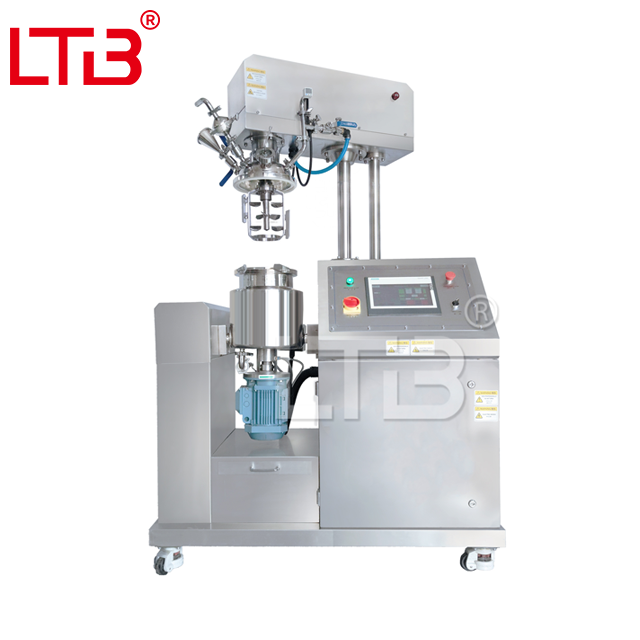
A vacuum emulsifying mixer is a device used to blend oil and water-based components under a vacuum condition. The mixer operates in a sealed environment, reducing air content and preventing the formation of bubbles or foam, which can negatively affect the product's texture. This type of emulsifier is especially critical for high-end cosmetic and pharmaceutical formulations, where smooth, stable emulsions are essential.
The core function of a vacuum emulsifying mixer is to produce an emulsion—a mixture of two or more liquids that are typically immiscible, such as oil and water. The vacuum environment helps to remove air and volatiles from the mixture, which can help stabilize the emulsion, improve its texture, and extend its shelf life.
The key components of a vacuum emulsifying mixer include:
High-Shear Mixer: Ensures the emulsification of ingredients by rapidly shearing them into smaller particles, creating a fine and uniform emulsion.
Vacuum System: Removes air from the mixture, helping to prevent the inclusion of air bubbles in the final product.
Temperature Control: Allows precise control over the mixing temperature, which is critical in achieving optimal viscosity and consistency.
Discharge Valve: Provides easy and efficient discharge of the finished emulsion, ensuring minimal product waste.
How Do Vacuum Emulsifying Mixers Work?
Vacuum emulsifying mixers work by creating a vacuum environment within the mixing chamber, which enables the emulsification of various substances—such as oils, water, surfactants, and thickeners—without trapping air. Here’s a step-by-step breakdown of the process:
Ingredient Preparation: Ingredients are pre-loaded into separate chambers, typically in liquid form, ready to be emulsified.
Heating: The materials are heated to a specific temperature to enhance the emulsification process. This is often done in a double-jacketed chamber where steam or hot water circulates, keeping the temperature consistent.
Vacuum Application: Once the ingredients are heated, the vacuum system is activated to remove air from the mixing chamber. This prevents the formation of bubbles and ensures the product remains smooth and uniform.
High-Shear Mixing: The high-shear mixer blades then rapidly rotate at high speeds, breaking down the ingredients into fine droplets, facilitating the formation of a stable emulsion.
Emulsion Formation: The oil and water phases are combined effectively, and the final product achieves the desired texture, consistency, and stability.
Discharge: After emulsification, the finished product is discharged from the system through a discharge valve, ready for further processing or packaging.
Types of Vacuum Emulsifying Mixers
There are various types of vacuum emulsifying mixers designed to meet different production needs and batch sizes. The primary difference among these mixers lies in their capacity, features, and the level of automation involved. Here are the most common types:
Laboratory-Scale Vacuum Emulsifying Mixers: Typically used for small batch production or R&D purposes, these mixers have a smaller capacity, ranging from 5L to 20L. They are ideal for formulating test batches, ensuring that the product meets the desired specifications before scaling up production.
Small-Scale Vacuum Emulsifying Mixers: These mixers have a capacity between 50L and 100L and are used in small-scale production environments. They are perfect for businesses that need high-quality emulsions for limited production runs.
Industrial-Scale Vacuum Emulsifying Mixers: These larger systems, which range from 200L to several tons, are designed for high-volume production. They can handle large quantities of materials and are equipped with advanced control systems for precise automation and high efficiency.
Hydraulic Vacuum Emulsifiers: These mixers utilize hydraulic lifting systems, providing smooth lifting and lowering operations. Hydraulic vacuum emulsifiers are commonly used for large-volume batches, such as in the cosmetic or pharmaceutical industries.
Benefits of Using Vacuum Emulsifying Mixers
Vacuum emulsifying mixers offer a range of benefits that make them an invaluable asset for many industries. Some of the key advantages include:
Improved Product Quality: The vacuum environment reduces the amount of air in the mixture, leading to more stable emulsions with a smooth, uniform texture.
Enhanced Shelf Life: By removing air and volatiles from the mixture, vacuum emulsifying mixers help to extend the shelf life of products, particularly in the cosmetics and food industries.
Increased Efficiency: The high-shear mixing capabilities allow for faster emulsification, reducing production time and increasing throughput.
Customization: Many vacuum emulsifying mixers offer customizable features, such as temperature control, shear speed adjustment, and automated discharge, allowing for more flexible production processes.
Cost Savings: The precision and speed of these mixers help minimize product waste and energy consumption, making them cost-effective in the long run.
Applications of Vacuum Emulsifying Mixers
Vacuum emulsifying mixers are used across a wide range of industries that require the mixing of immiscible liquids. Key applications include:
Cosmetics and Personal Care: Used to create products like lotions, creams, and serums, which require a smooth, uniform texture and stable emulsion.
Pharmaceuticals: Essential for manufacturing ointments, creams, and other topical medications that require precise emulsification.
Food and Beverages: Used in the production of sauces, dressings, creams, and spreads, ensuring a smooth and stable consistency.
Chemicals: Employed in the production of various chemical formulations, such as paints, coatings, and adhesives.
Factors to Consider When Choosing a Vacuum Emulsifying Mixer
When selecting a vacuum emulsifying mixer for your production line, several factors should be considered:
Capacity: Choose a mixer based on the batch size you require for your production.
Automation: Determine whether manual, semi-automatic, or fully automatic controls are necessary for your production process.
Material Compatibility: Ensure that the materials used in the construction of the mixer (such as stainless steel) are compatible with the products you are manufacturing.
Temperature Control: Look for mixers that offer precise temperature control, especially for sensitive formulations.
Cleaning and Maintenance: Opt for models with easy cleaning and maintenance procedures, such as CIP (Cleaning In Place) systems.
Trends in Vacuum Emulsifying Mixer Technology
As technology advances, so do the capabilities of vacuum emulsifying mixers. Some of the latest trends include:
Integration of Automation: More vacuum emulsifying mixers are being equipped with automated systems for precise control over mixing, temperature, and time.
Energy Efficiency: Manufacturers are focusing on energy-efficient designs that reduce power consumption without sacrificing performance.
Smart Features: The use of sensors and IoT (Internet of Things) technology is increasing, enabling real-time monitoring and remote control of the mixing process.
Sustainability: There is a growing emphasis on creating sustainable and eco-friendly mixers, using recyclable materials and energy-saving designs.
Comparison of Vacuum Emulsifying Mixers with Other Mixing Equipment
While vacuum emulsifying mixers are highly specialized, they are not the only option for blending ingredients. Here’s a comparison of vacuum emulsifying mixers with other common mixing equipment:
| Mixer Type | Vacuum Emulsifying Mixer | High-Shear Mixer | Batch Mixer |
|---|---|---|---|
| Best for | Oil-water emulsions | Homogenization | Simple mixing applications |
| Vacuum Environment | Yes | No | No |
| Air Removal | Yes | No | No |
| Temperature Control | Yes | Optional | Limited |
| Capacity | Small to large batches | Small to medium batches | Medium to large batches |
Conclusion
Vacuum emulsifying mixers play a crucial role in the production of high-quality emulsions in industries ranging from cosmetics to food and pharmaceuticals. Their ability to create stable, air-free emulsions, while maintaining consistent texture and quality, makes them a valuable tool for manufacturers. By choosing the right vacuum emulsifying mixer and staying on top of the latest trends in technology, businesses can ensure efficient production processes and superior product outcomes.
At LTB Machinery, we specialize in manufacturing high-performance vacuum emulsifying mixers designed to meet the needs of the cosmetics, food, and pharmaceutical industries. With our expertise in equipment manufacturing, we provide tailored solutions to help businesses achieve their production goals with precision and efficiency.


